Blog

What AI agents actually read

Original research and plain-English guides on getting your products read, trusted, and recommended by AI shopping agents.
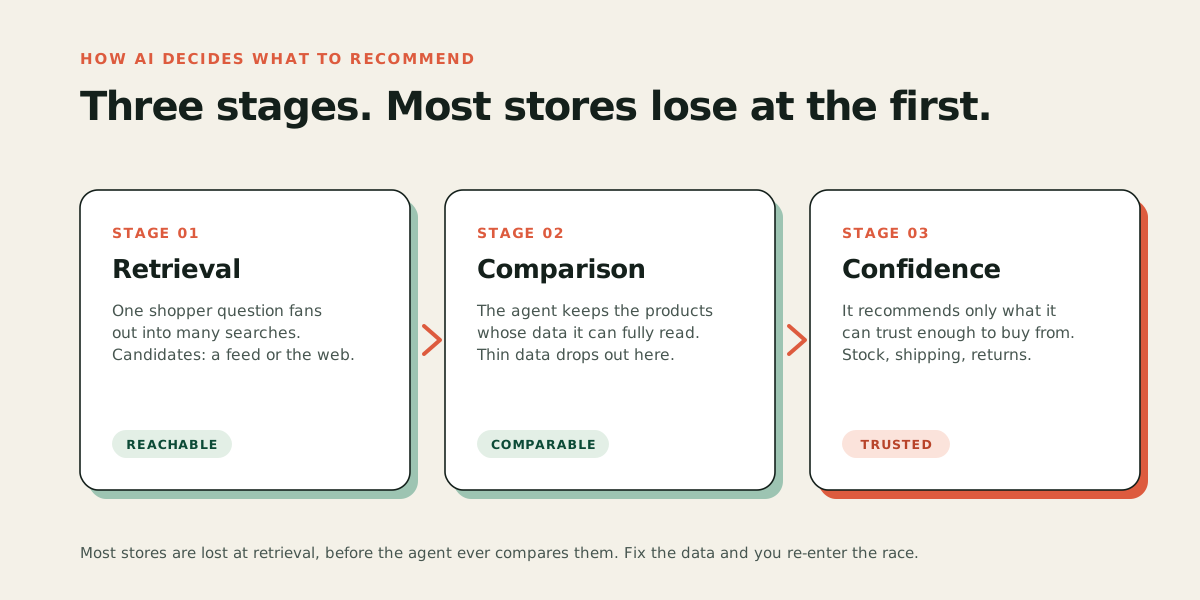
The three stages an AI shopping agent runs to decide what to recommend, left to right: Retrieval, where one shopper question fans out into many searches and candidate products are pulled from a feed or the web; Comparison, where the agent favors products whose data it can fully read; and Confidence, where it recommends only what it can trust and buy from. A note underneath reads that most stores are lost at retrieval.

How to Get Your Products Recommended by AI (ChatGPT, Perplexity, and Google)

AI shopping agents don't browse your store the way a person does. They retrieve, compare, and recommend the products they can fully describe and trust. Here is how that decision works across ChatGPT, Perplexity, and Google, and what a store owner controls at each step.

Read it →
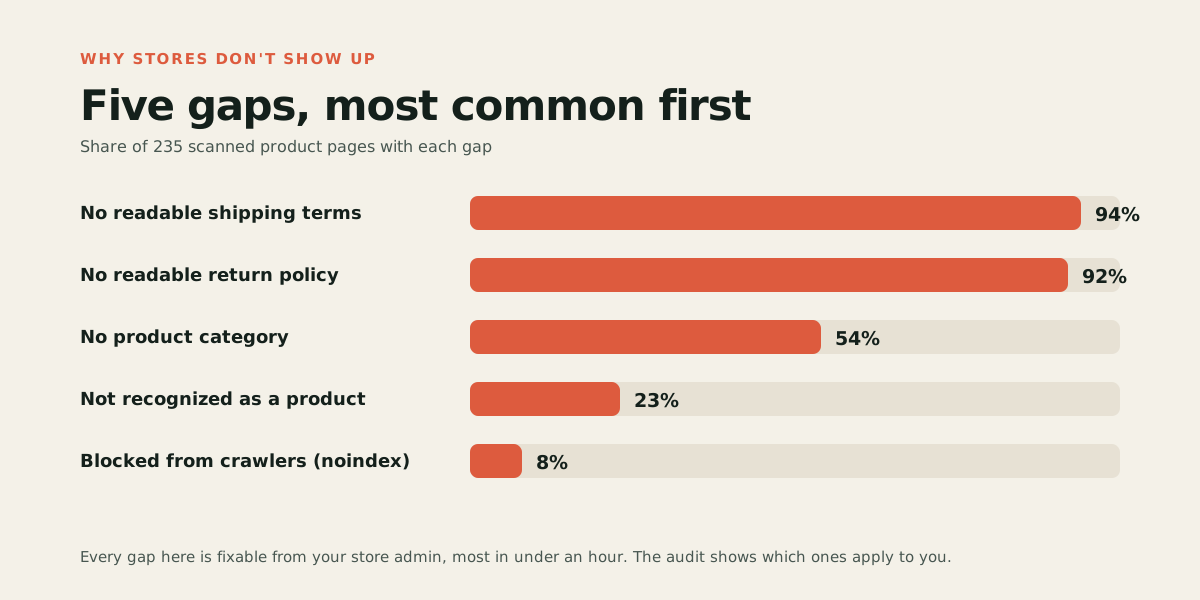
Bar chart of the five most common reasons stores are missing from AI recommendations, by share of 235 scanned pages: no readable shipping terms 94 percent, no readable return policy 92 percent, no product category 54 percent, not recognized as a product 23 percent, blocked from crawlers 8 percent.

Why Your Store Doesn't Show Up in AI Recommendations (and How to Fix It)

Five reasons AI shopping agents skip your store, each with a self-check and a fix. Based on a scan of 235 real product pages where 94% had no readable shipping terms and 47% had nothing an agent needs to complete a purchase.

Read it →
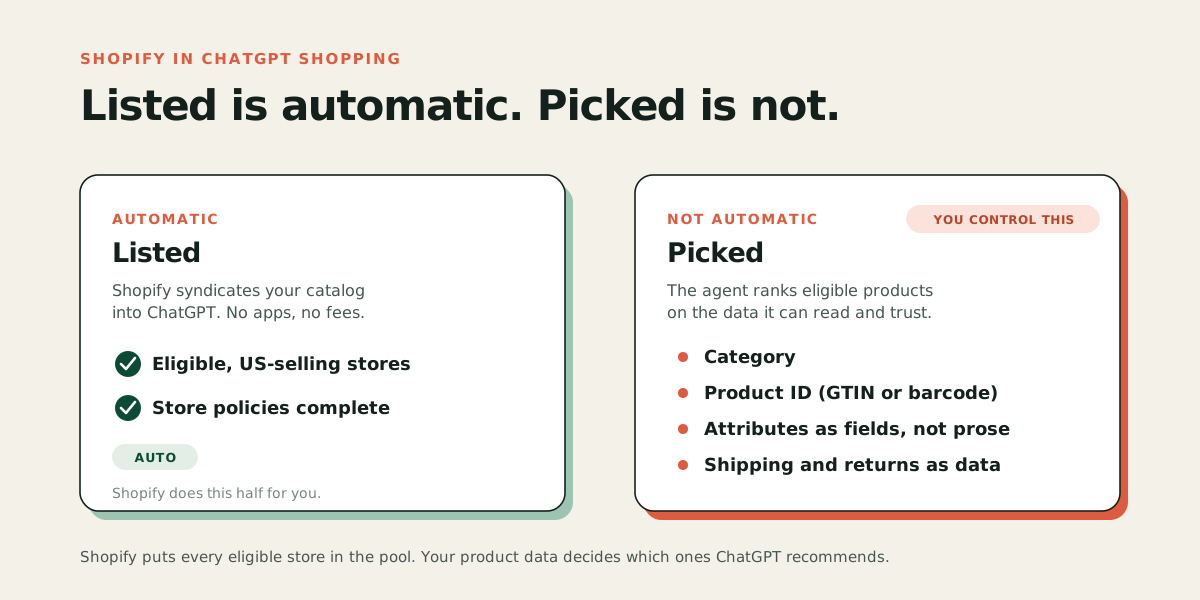
Two panels. Listed: Shopify automatically syndicates eligible US-selling stores' catalogs into ChatGPT, with no apps or fees. Picked: the agent ranks eligible products on the data it can read, category, product ID, attributes, and shipping and returns, which is the part the store controls.

How to Get Your Shopify Products into ChatGPT Shopping

Shopify already sends your catalog to ChatGPT automatically. Getting listed is not the same as getting picked. Here is what ChatGPT reads, in what order, and the product data checks a Shopify owner can run today.

Read it →
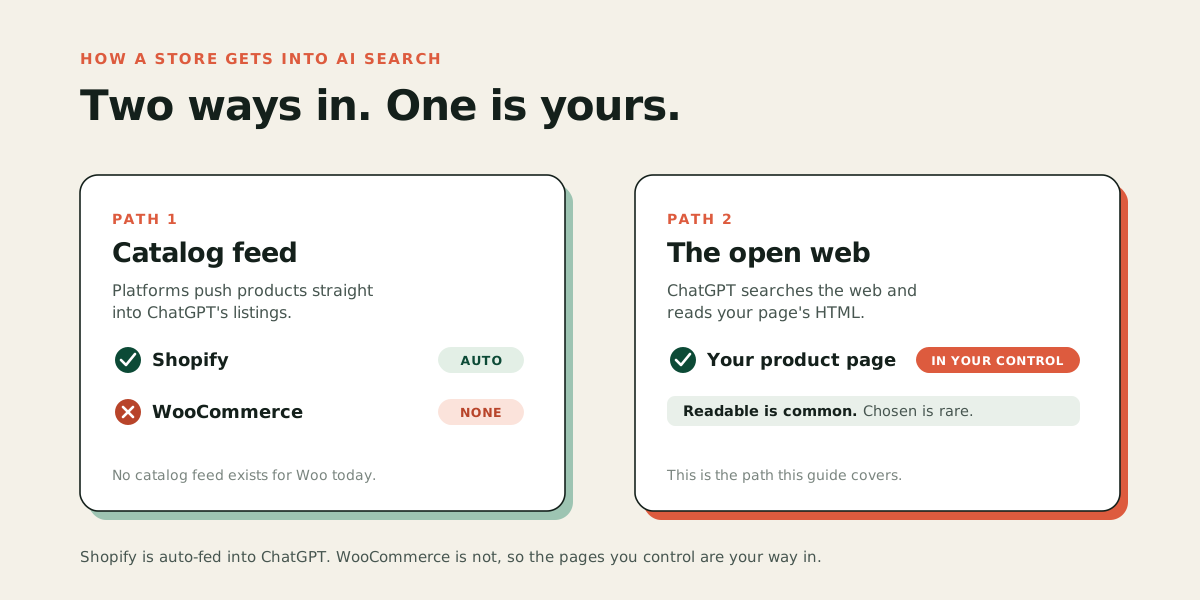
Two ways a store gets into AI search. Path one, a platform catalog feed, is automatic for Shopify and unavailable to WooCommerce. Path two, the open web, is your product page's own HTML, which every store controls.

How to Get Your WooCommerce Store into AI Search

Shopify stores get pushed into ChatGPT automatically. WooCommerce stores get nothing for free. Here is what AI agents actually read on a WooCommerce product page, and the seven checks an owner can run without a developer.

Read it →
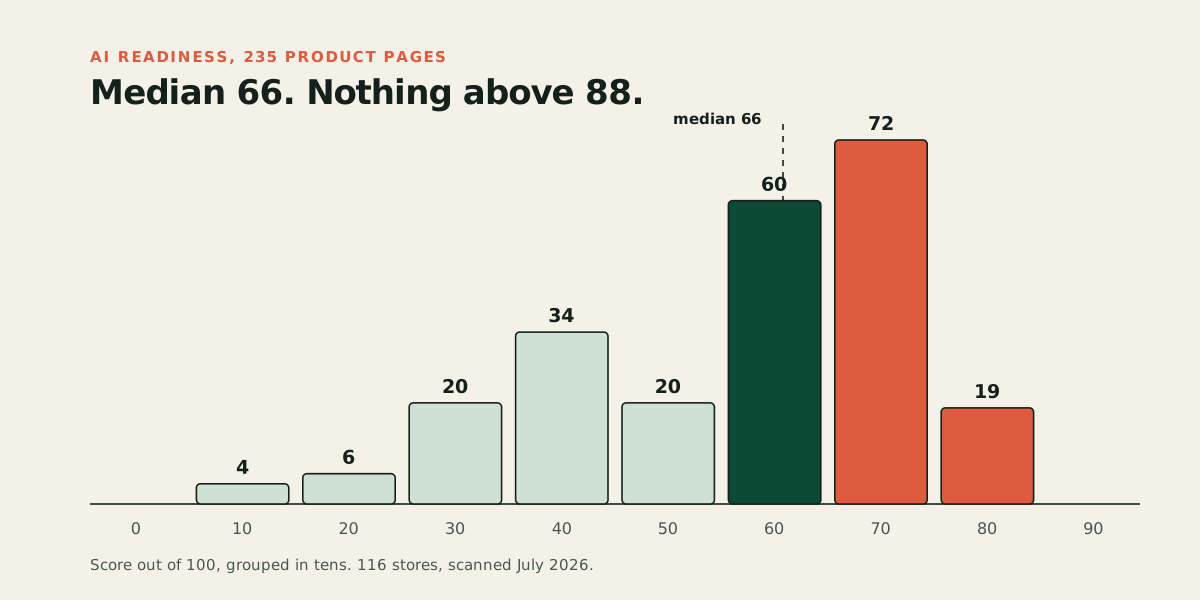
Distribution of AI readiness scores across 235 product pages. Most sit between 60 and 80, the median is 66, and none reach 90.

We Scanned 235 Product Pages. Almost Half of Them Can't Be Bought From by an AI Agent.

A study of 235 live product pages across 116 stores on Shopify, WooCommerce, Magento and BigCommerce. The median page scores 66 out of 100 for AI readiness, but 92% have no return policy an agent can read, 94% no readable shipping, and 47% have nothing an agent needs to complete a purchase.

Read it →